Core Course Trending

Using Generative AI to Develop Active Learning Experiences

Beginner level

No prior experience required

Flexible schedule

3 weeks, 6 to 8 hours per week

Instructor feedback

Get guidance on your work

Verified certificate

Share on LinkedIn

*Proof of full-time student enrollment required. Acceptable forms of ID include a letter from your university’s registrar office or an unofficial transcript. Email your documents to learnlab-help@lists.andrew.cmu.edu.

What you will learn

  • Use prompt engineering techniques to generate learning activities, examples, and feedback with generative AI.
  • Evaluate where AI can strengthen active learning and where human judgment is still essential.
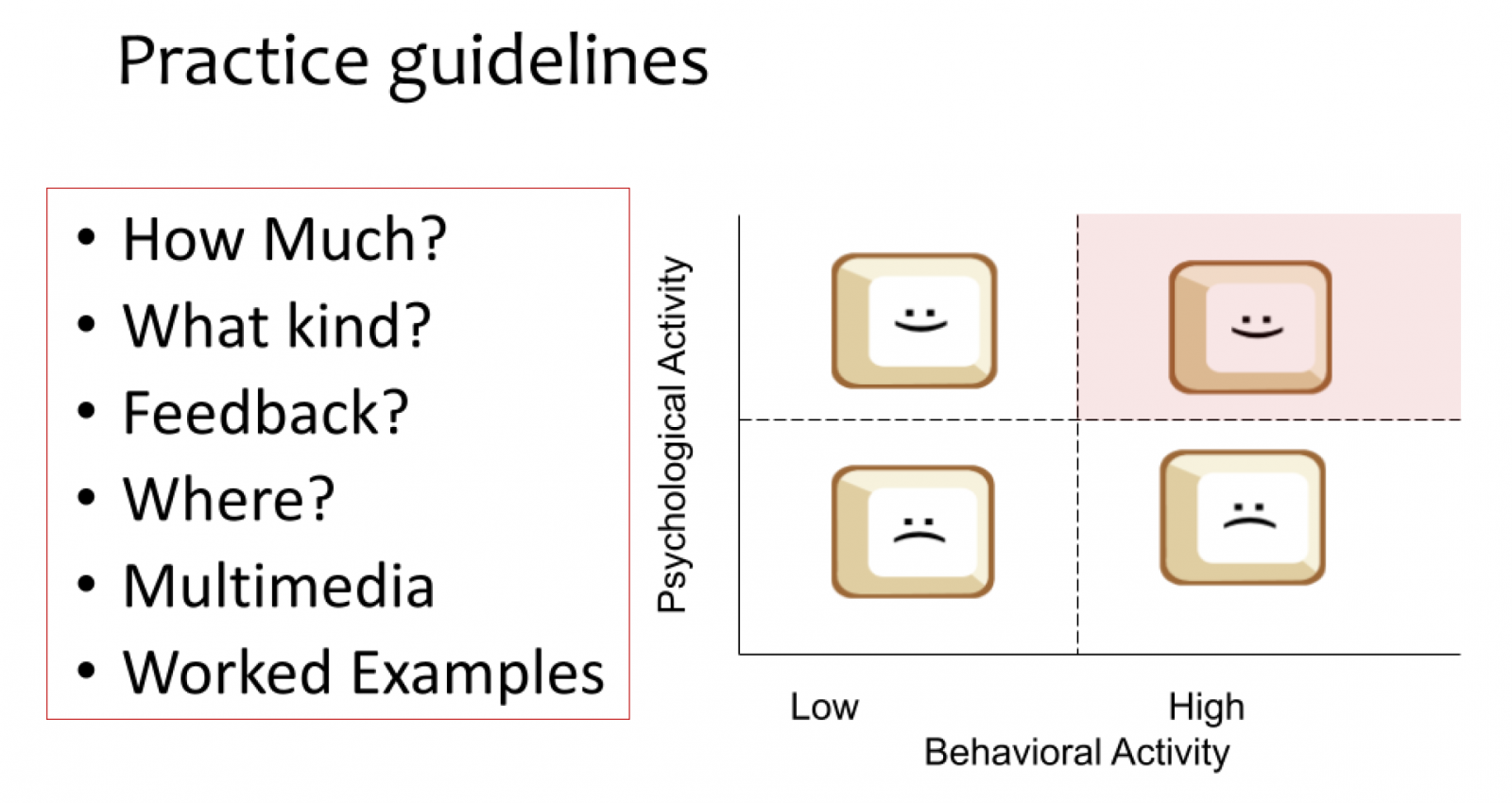
  • Design AI-supported activities that promote meaningful learner practice rather than passive consumption.
  • Build a practical workflow for integrating generative AI into course development.

Course description

Generative AI can speed up content creation, but its real value in education comes from helping teams design more active, engaging, and adaptive learning experiences. The opportunity is not just to produce materials faster, but to create better practice, feedback, and interaction for learners.

In this course, you will learn how to use generative AI to design active learning experiences through prompt engineering, structured content generation, and tool-enabled workflows. You will examine where AI can support learning design effectively, where it needs human judgment, and how to turn AI outputs into meaningful educational experiences.

Syllabus

Module 1: Leveraging LLMs: Prompt Engineering, from Definition to Evaluation
  • Analyze recent research on generative AI in education to identify where and how it outperforms traditional approaches.
  • Apply prompt engineering strategies to optimize the performance of Large Language Models (LLMs) in generating desired educational outputs.
  • Differentiate between zero-shot and few-shot prompting, explaining appropriate scenarios for their utilization.
  • Demonstrate how to refine prompts through additional instructions or context to shape the output of Large Language Models.
  • Critically evaluate the output from Large Language Models for reliability and accuracy, identifying potential instances of hallucination.
Module 2: Top-Down Design: Implementing Educational Tasks with LLMs and Learning Science Principles
  • Divide an educational task into subtasks as part of top-down design based on the concept of LLM chains.
  • Contextualize educational problems to match individual student interests in intelligent tutoring systems using large language models.
  • Design personalized learning experiences using generative AI tools to adapt content and support to individual learner needs.
  • Implement AI-driven tutoring and feedback strategies grounded in pedagogical best practices to enhance student mastery.
  • Apply generative AI to boost student engagement and motivation through interactive and adaptive learning activities.
Module 3: Integrating LLMs in Educational Tools: Practical Examples
  • Differentiate between LLM APIs and conversational chatbots justifying the use of APIs in educational contexts despite the convenience of chatbots.
  • Analyze the implications of hyperparameter tuning in prompt engineering for optimizing the LLM outputs.
  • Utilizing DSPy for programming foundational models with minimal code to solve a given task.
  • Integrate generative AI tools to provide timely, formative feedback on student work, thereby improving the revision process and learning outcomes.
  • Create effective distractors for multiple-choice questions using LLMs that align with learning outcomes and target students’ misconceptions.
  • Address ethical, privacy, and cognitive challenges when integrating generative AI in learning designs.
Module 4: Course Project

At the end of the course, you’ll have an opportunity to do a two-step project from three choices based on area of your interest i.e Educational Tool Design (UX/UI), Educational Tool Development (Technical), or Prompt Engineering Template (Instructional Design). That will provide you with a nice experience to apply the fundamentals you will learn in the modules to a larger, more authentic, context. It will be graded by the instructor and you will receive personalized feedback.

Meet the instructor

Gautam Yadav

Gautam Yadav

Senior Learning Engineer
Carnegie Mellon University

Gautam Yadav is a Senior Learning Engineer with experience partnering with academic leaders to design and operate data-driven talent development programs. He has led learning initiatives that improved performance, mastery, and engagement at scale, and has led the end-to-end design and delivery of instructional content across LearnLab certificate programs.