Intermediate level
Prerequisite: Build Intelligent Tutors with CTAT

Prerequisite: Build Intelligent Tutors with CTAT
4 weeks, 6 to 8 hours per week
Get guidance on your work
Share on LinkedIn
*Proof of full-time student enrollment required. Acceptable forms of ID include a letter from your university’s registrar office or an unofficial transcript. Email your documents to learnlab-help@lists.andrew.cmu.edu.
Building more advanced intelligent tutors requires a model of how learners solve problems, not just a record of correct answers. Rule-based cognitive models make it possible to represent the steps, knowledge, and decision points behind learner performance so tutors can respond more intelligently.
In this course, you will learn how to develop rule-based cognitive models in CTAT for cognitive tutors. You will examine how to represent expert problem solving step by step, connect model structure to tutor behavior, and build more sophisticated tutoring systems for domains where process matters as much as outcome.
At the end of the course, you’ll have an opportunity to build a rule-based tutor for a task for which building an example-tracing tutor is not practical, namely, an abductive reasoning task in Mendelian genetics. That will provide you with a nice experience to apply the fundamentals you will learn in the modules to a larger, more authentic context. It will be graded by the instructor and you will receive personalized feedback along with a sample solution.
The project offers an opportunity to learn about doing an analytical cognitive task analysis, designing your own working memory representation, modeling steps with multiple rules, linking the interface representation dynamically to the semantic representation of the problem, creating a dynamic interface with a Nools tutor, and using additional Nools constructs such as not, exists, salience, and arrays as slot values.
You will also have the option to take a final exam with 20 questions. The exam can be taken multiple times, and each attempt draws new questions randomly from a pool of questions.
You may also complete both the course project and the final exam. The higher of the two scores will count toward the certificate.

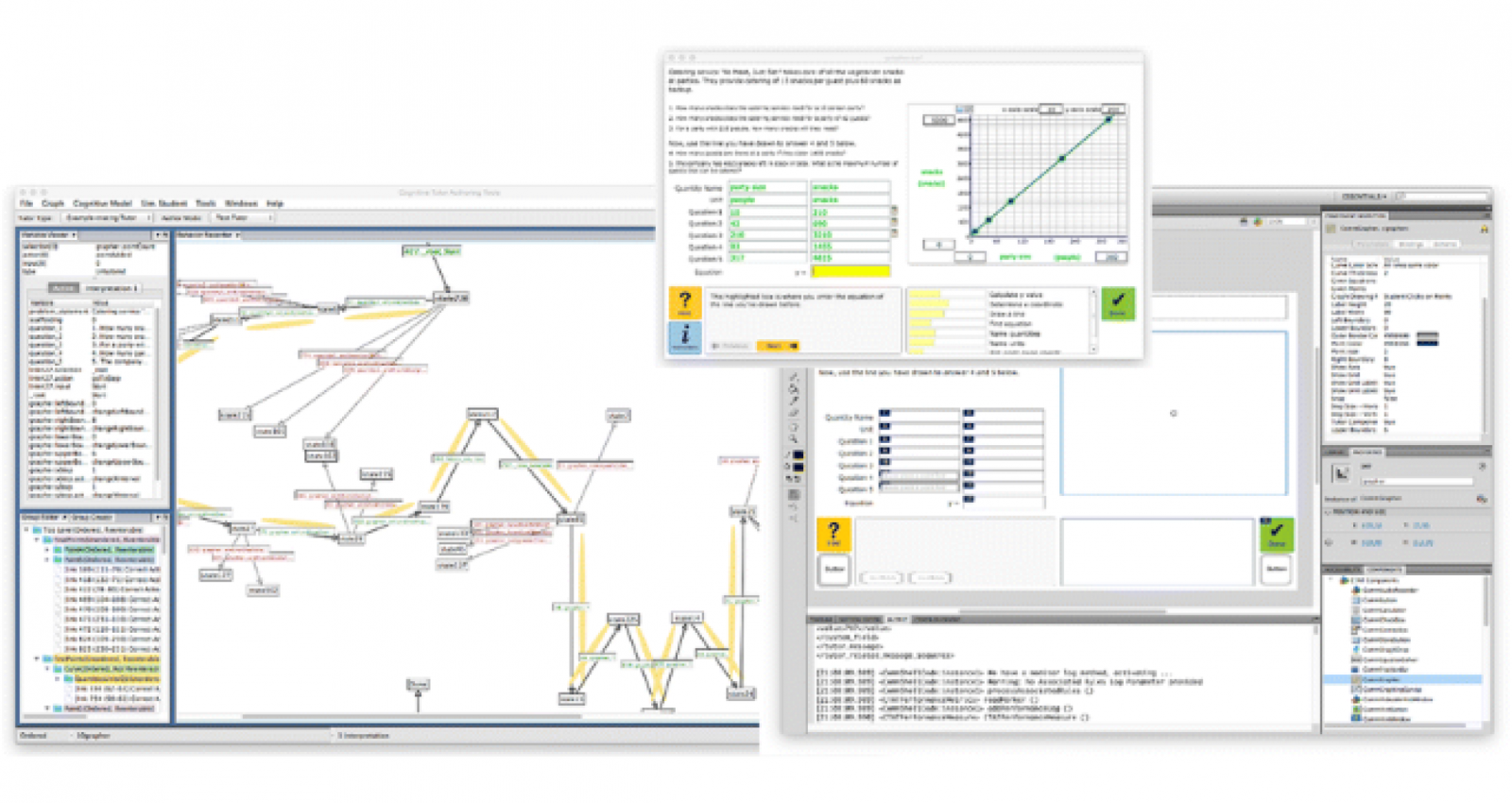
Create example-tracing tutors with CTAT without programming and develop intelligent tutoring experiences through demonstration and behavior design.
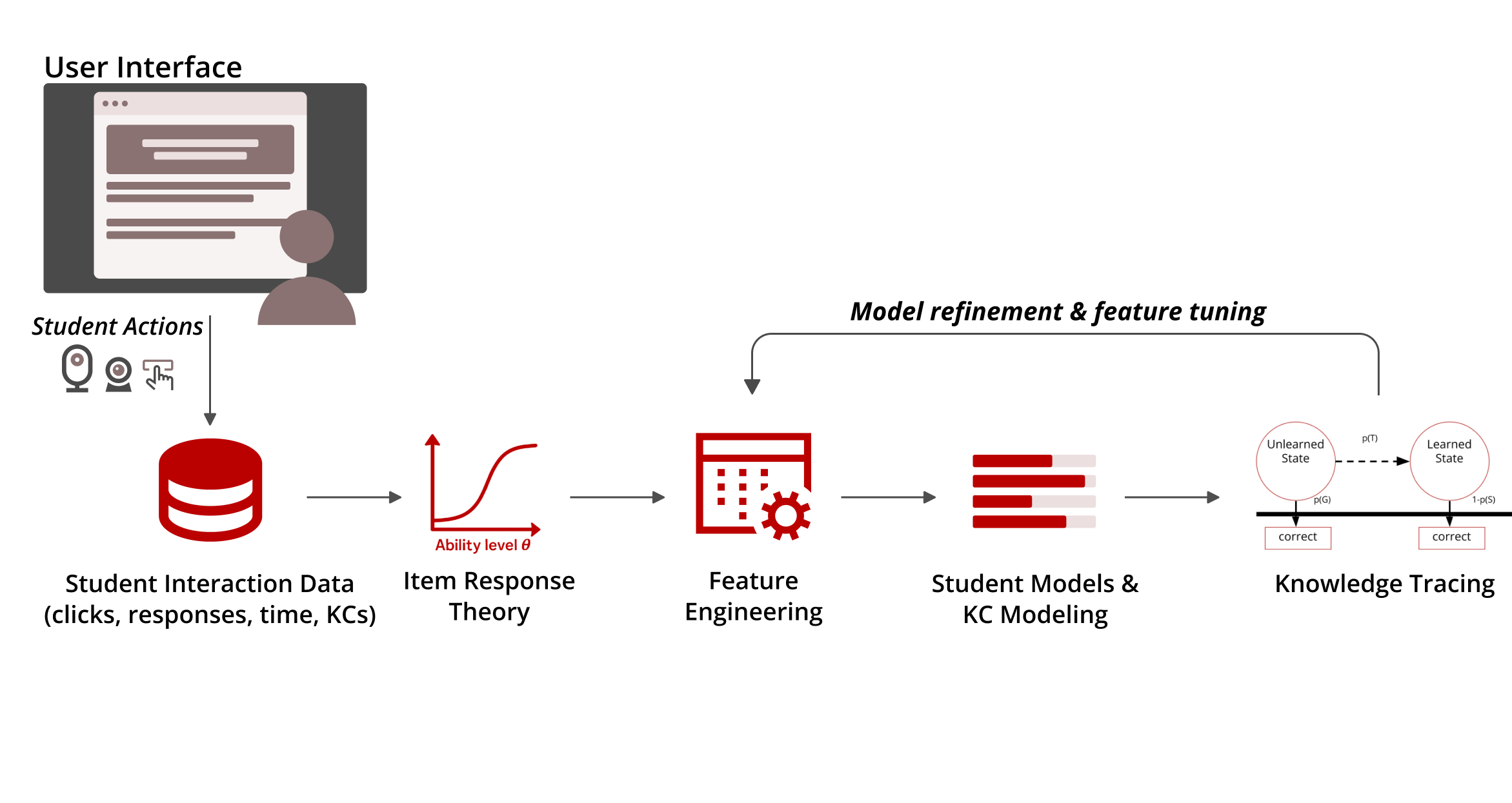
Build predictive models and use knowledge tracing to model learner progress and support adaptive learning systems.
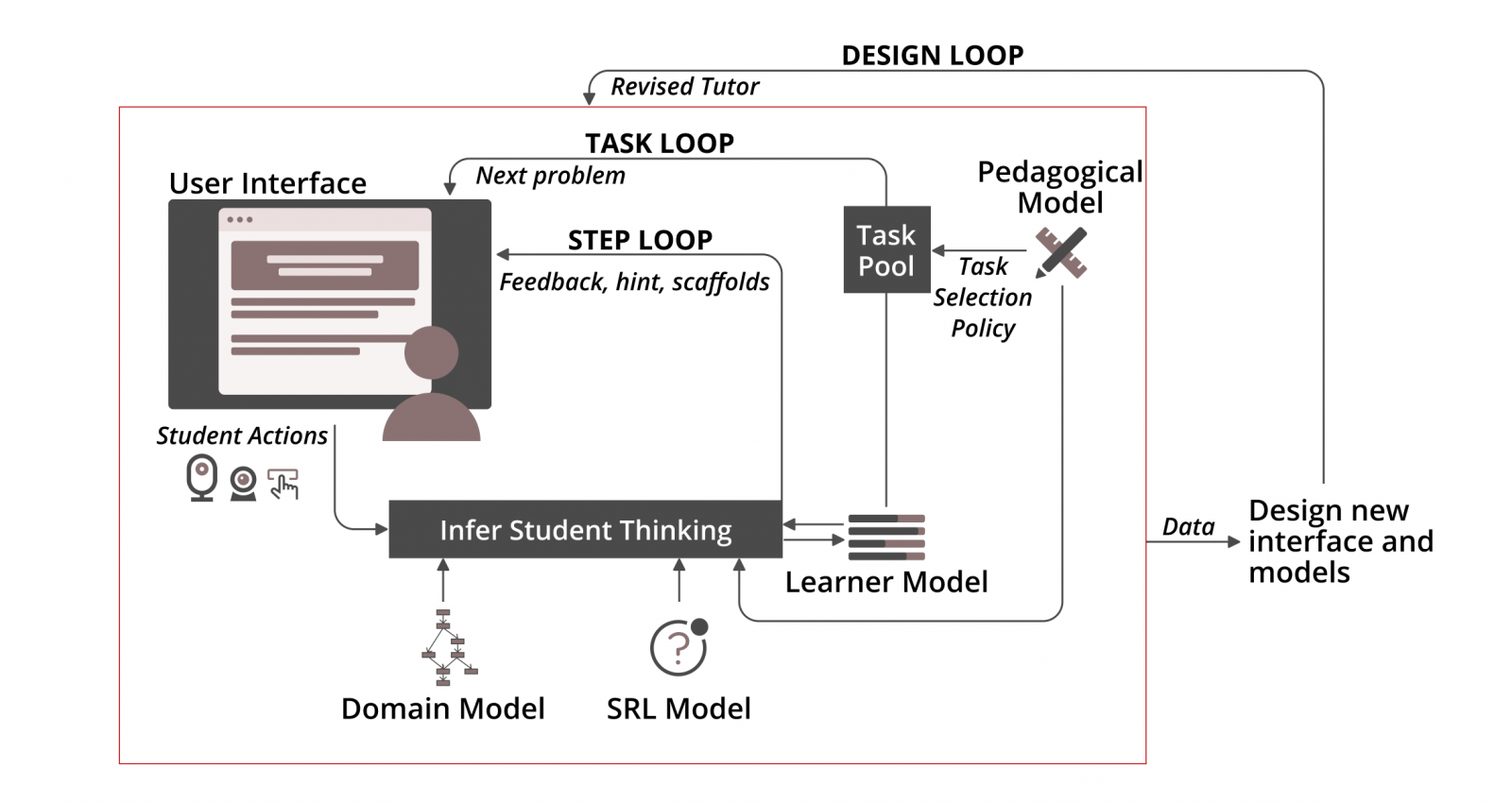
Design adaptive learning experiences and intelligent tutoring systems that personalize support based on learner knowledge, behavior, and affect.
