Core Course Best Starting Point

Introduction to Learning Engineering

Beginner level

No prior experience required

Flexible schedule

3 weeks, 6 to 8 hours per week

Instructor feedback

Get guidance on your work

Verified certificate

Share on LinkedIn

*Proof of full-time student enrollment required. Acceptable forms of ID include a letter from your university’s registrar office or an unofficial transcript. Email your documents to learnlab-help@lists.andrew.cmu.edu.

What you will learn

  • Describe the cognitive and behavioral processes involved in how people learn.
  • Navigate the challenges of designing effective instruction across different kinds of e-learning.
  • Apply evidence-based practice and distinguish research approaches used to study instructional effectiveness.
  • Given a learning objective, identify the relevant kinds of knowledge and learning needed to choose appropriate instructional principles.
  • Use the KLI framework to select instructional principles that match the desired knowledge components and learning processes.

Course description

Learning engineering has shaped Carnegie Mellon University's approach to education since Herb Simon first coined the term more than fifty years ago. It is the work of designing, building, and improving learning environments, whether they are in person, online, or hybrid. Learning engineers draw on the science of learning, evidence-based research, qualitative and quantitative cognitive task analysis, and data-driven methods to create educational experiences and technologies that help learners and instructors succeed.

In this course, you will examine how people learn, why instructional design is more complex than it first appears, and how to use the KLI framework to match instructional principles to the kinds of knowledge and learning you want to support. The course is designed to give you a strong foundation for making practical design decisions and a clear path into the field of learning engineering. If you find it interesting and want to dig deeper, you can take other courses that elaborate on the principles and methods used in learning engineering.

Syllabus

Module 1: E-learning Promises and Pitfalls
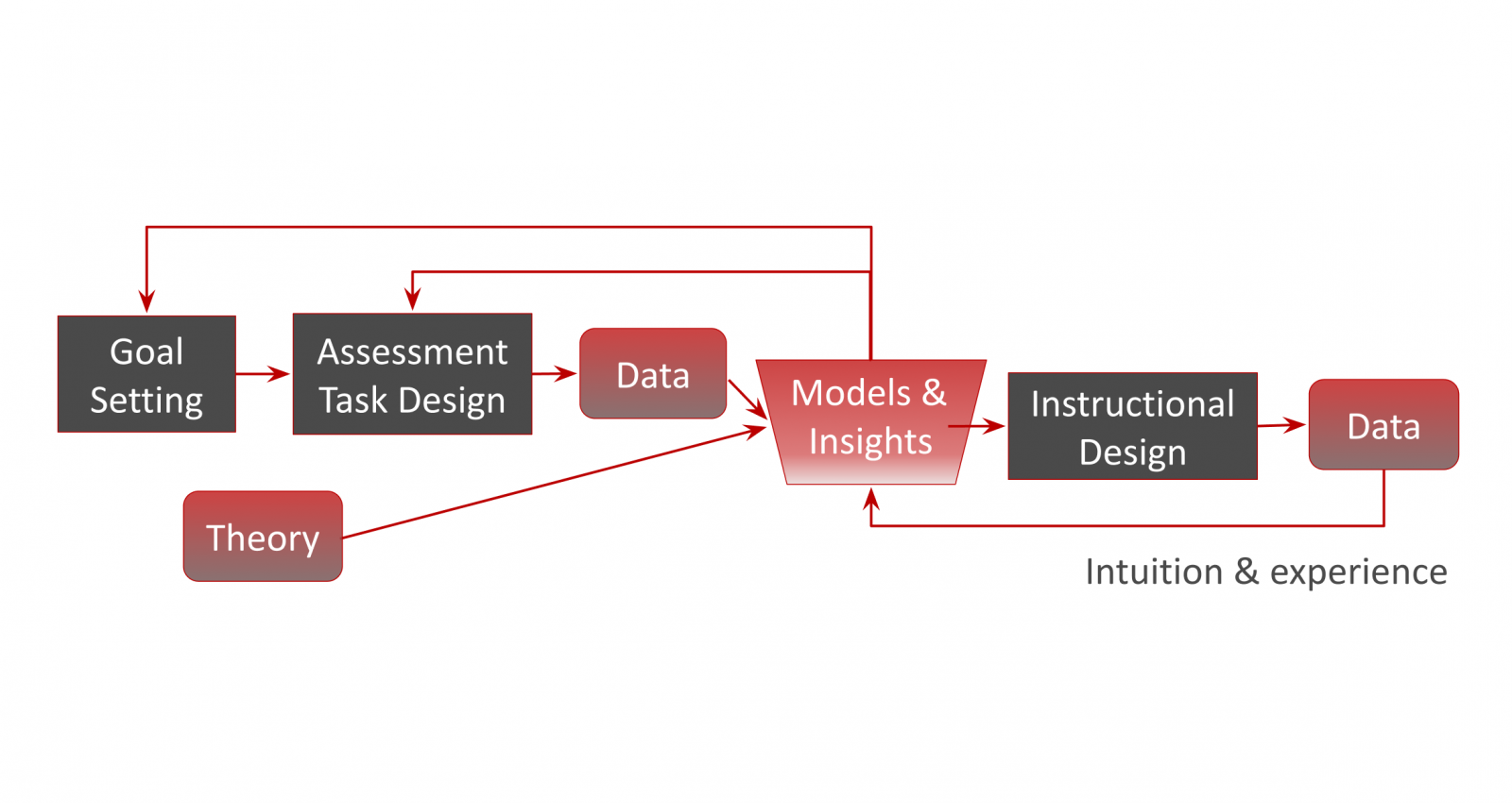
  • Recall elements of the learning design big picture diagram.
  • Classify major kinds of e-learning by timing, lesson type, and instructional architecture.
  • Evaluate research evidence on media comparisons.
  • Identify the good, bad, and ugly of e-learning, including its promises and pitfalls.
Module 2: How People Learn and Instructional Complexity
  • Distinguish technology-centered from learner-centered perspectives, and learning from instruction.
  • Identify key metaphors, principles, and events involved in learning.
  • Distinguish major forms of cognitive processing and cognitive load during learning.
  • Explain why instructional design is complex, including the size of the design space and the way optimal choices depend on content.
Module 3: Knowledge-Learning-Instruction Framework
  • Categorize knowledge components along four dimensions.
  • Explain the differences among knowledge components, learning events, instructional events, and assessment events in the KLI framework.
  • Explain which learning processes are needed for different kinds of knowledge.
  • Given an instructional principle or learning objective, identify the kinds of knowledge and learning involved and the instructional principles that fit them.
  • Analyze boundary conditions for when worked examples are more effective than practice.
Module 4: Evidence-based Practice and Applying the Guidelines
  • Apply evidence-based practice to instructional design decisions.
  • Identify research approaches used to study instructional effectiveness, features of good experiments, and reasons for null effects.
  • Interpret statistical significance in context.
  • Summarize key concepts of the KLI framework, including instructional goals, knowledge components, and learning processes.
  • Use KLI to choose instructional principles that match the desired knowledge components and learning processes.
Module 5: Course Project or Final Exam

At the end of the course, you will have the opportunity to complete a short project in which you demonstrate your ability to apply learning engineering based on accumulated research evidence. This gives you a valuable opportunity to apply the fundamentals from the modules in a larger, more authentic context. The project will be graded by the instructor, and you will receive personalized feedback along with a sample solution.

You will also have the option to take a final exam with 20 questions. The exam can be taken multiple times, and each attempt draws new questions randomly from a pool of more than 150 questions.

You may also complete both the course project and the final exam. The higher of the two scores will count toward the certificate.

Meet the instructor

Dr. Ken Koedinger

Dr. Ken Koedinger

Professor
Carnegie Mellon University

Ken Koedinger is the Hillman University Professor of Computer Science at Carnegie Mellon University, with appointments in Human-Computer Interaction and Psychology. He holds an M.S. in Computer Science and a Ph.D. in Cognitive Psychology and has experience teaching in an urban high school. He has developed data-sharing and analytics infrastructures that support innovations in learning, including DataShop and LearnSphere, and has used them to improve learning as illustrated in his hundreds of publications. He directs LearnLab and co-founded Carnegie Learning in 1998, the first AI in Education company to bring intelligent tutoring technology into widespread use in schools. His PLUS project provides hybrid human-AI tutoring to middle school math students in schools around the country. He is a fellow of the Cognitive Science Society, the Association for Psychological Science, and the Association for Computing Machinery.