

Welcome
What is the Pittsburgh Science of Learning Center (PSLC)?
We leverage cognitive theory and cognitive modeling to identify the instructional conditions that cause robust student learning.
Our researchers study robust learning through our research facility, LearnLab. Learn more about us:
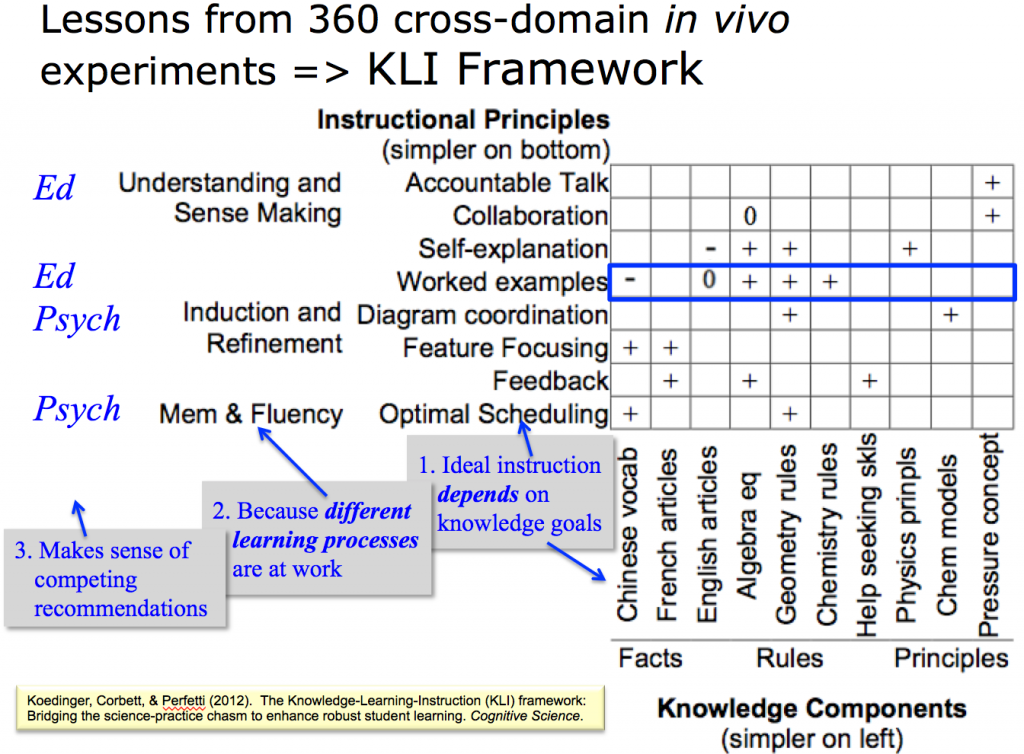
- Read our about Knowledge-Learning-Instruction Framework.
- Watch our introductory video or one of our other videos.
- Visit our theoretical wiki which includes a list of principles of learning and support from lab and in vivo experimental studies. (Click here to register).
What is LearnLab?
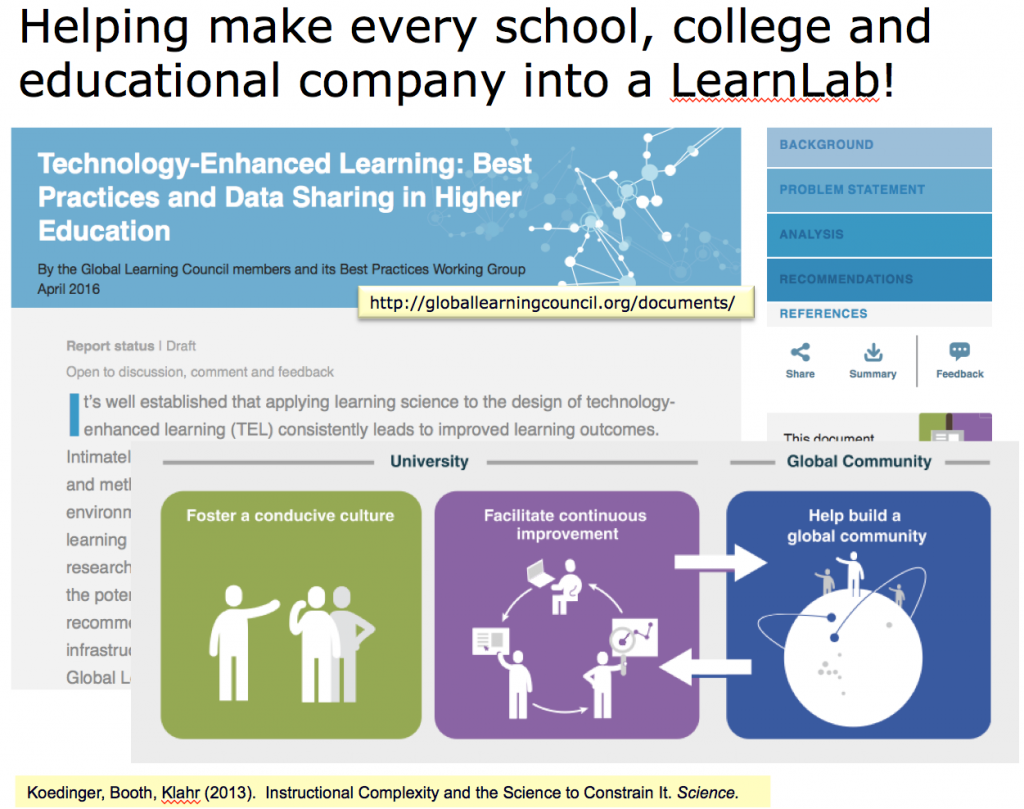
Learnlab is a facility designed to dramatically increase the ease and speed with which learning researchers can create the rigorous, theory-based experiments that pave the way to an understanding of robust learning.
Run jointly by Carnegie Mellon University and the University of Pittsburgh, LearnLab makes use of advanced technologies to facilitate the design of experiments that combine the realism of classroom field studies and the rigor of controlled theory-based laboratory studies.
PSLC's LearnLab is a national resource for learning research that includes:
- Authoring tools for online courses, experiments, and integrated computational learner models
- Support for running in vivo learning experiments
- Longitudinal microgenetic data from entire courses
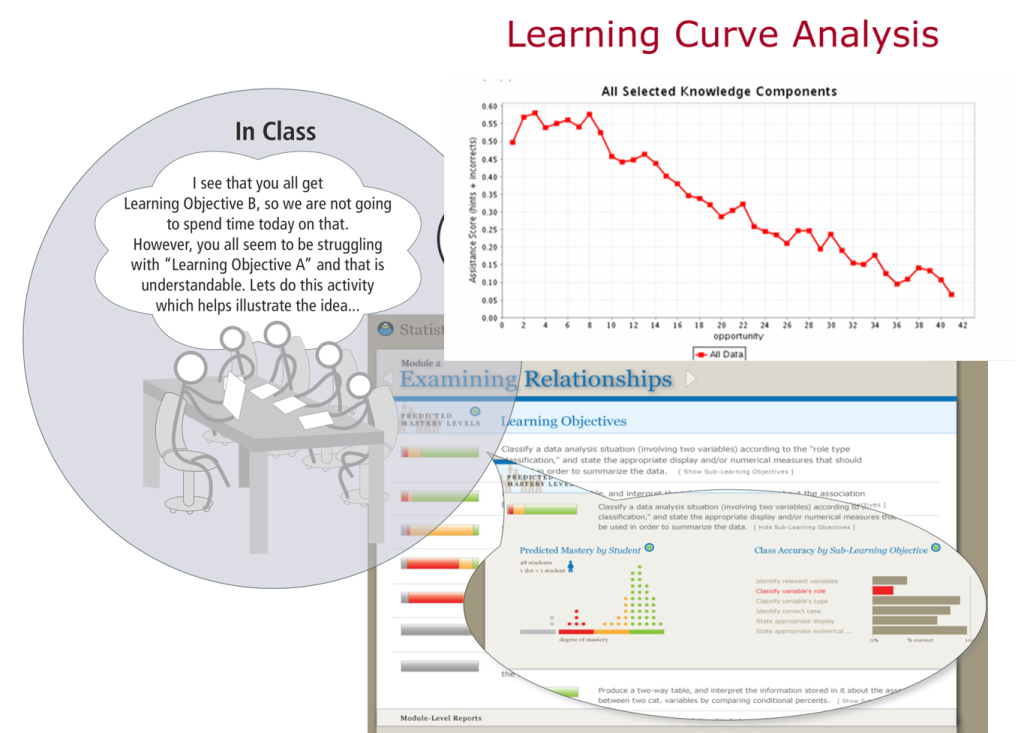
- Data analysis tools, including software for learning curve analysis and semi-automated coding of verbal data.
PSLC Research Thrust Organization
PSLC researchers are organized in research thrusts to bring researchers into coherent and integrative research. Thrust members develop the theoretical framework, hear and critique individual research projects and new research proposals, consider broad instructional principles that capture the results of research within and outside the PSLC, and develop sections of the PSLC theoretical framework wiki. A valuable cross-fertilization of ideas occurs as investigators consider other perspectives and work with others in a different thrust. Such cross-fertilization has resulted in the exploration of center-wide research themes such as the assistance hypothesis, and feature focus, among others.
Each thrust works on integrative papers for publication. These papers integrate by reviewing the research on (including PSLC research) on core problems in the learning sciences, by synthesizing studies carried out in the PSLC to highlight generalizations, and by producing theoretical-review papers.
Our four thrusts are entitled Social Communication; Metacognition and Motivation; Cognitive Factors; and Computation Modeling and Data Mining.
Participate in the PSLC
We welcome and are always seeking external participants. Please learn about what we can do for you.
Visit the NSF SLC Program Page
Find out more about the NSF's Science of Learning Center Program at www.nsf.gov/slc
Information for Members
DataShop v4.2 Released
The new Metrics Report was released in August 2010.
Don't forget to vote for the feature you think is the most important. Go to the DataShop feature wish list on the theory wiki.
Keep up-to-date on the latest DataShop news on our about page.
For information on our logging format, take a look at the Guide to the Tutor Message Format available under Logging Format on our home page as of October 2007.
Project Study Guidelines
If you are running a study in the PSLC, information about our guidelines can be found here.
PSLC Partners